IEEE Toronto Newsletter- August 2026
Editor Welcome Message
Welcome to the August issue of the IEEE Toronto Section Newsletter. Hope everyone is enjoying the warmth and energy of summer. This issue celebrates the vibrant activities taking place across our section from technical events to the remarkable accomplishments of our members. We continue our commitment to highlighting the stories of our members their professional journeys, research contributions, volunteer effort within our IEEE Toronto section community.
We are pleased to welcome Naeimeh Najafizadeh as a new Associate Editor to join the editorial team of IEEE Newsletter, Toronto section.
Read the second article Beyond the Degree: Career Clarity for STEM Graduates in STEM Career Series authored by Silvana Mello.
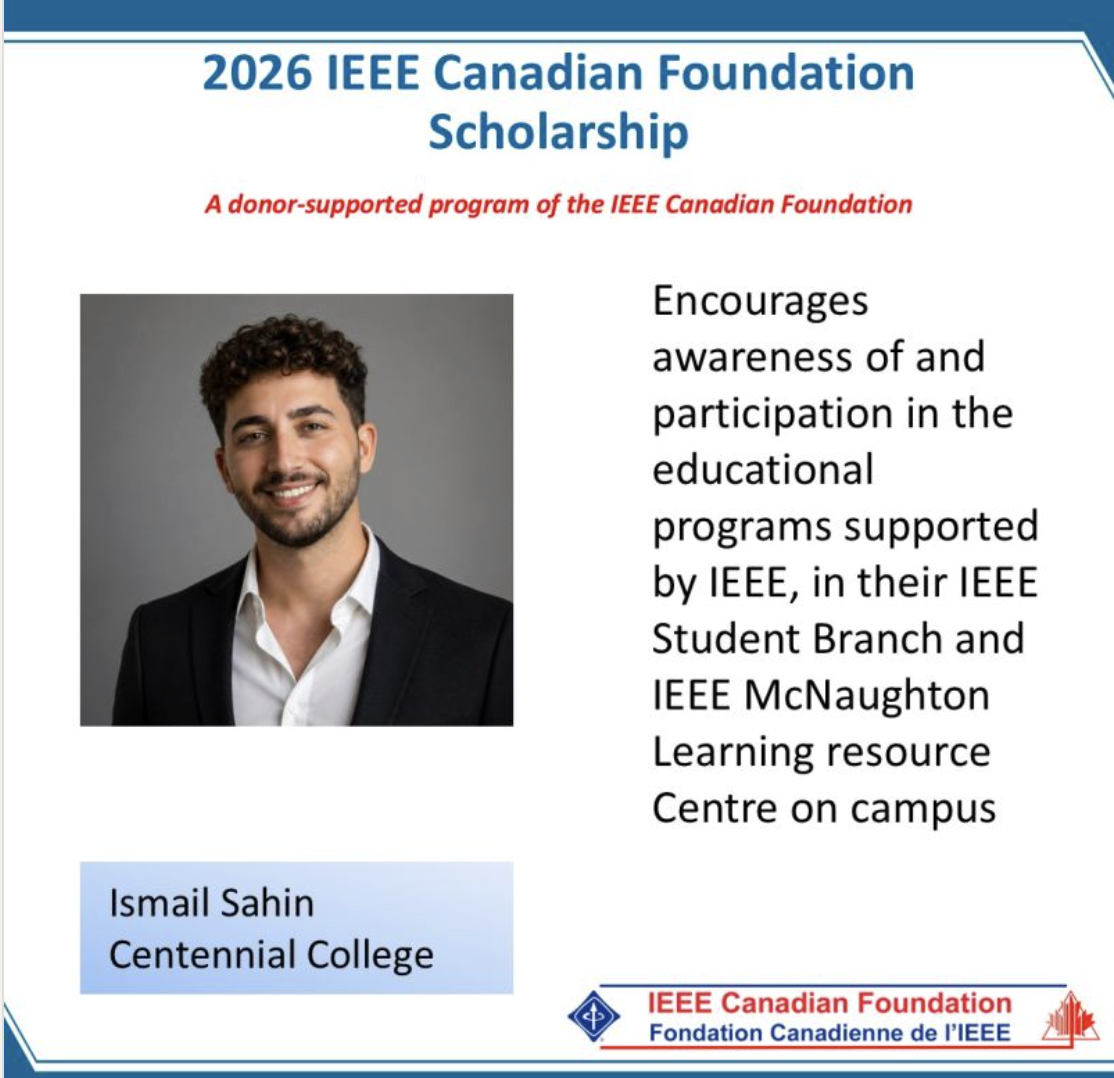
In this edition, Toronto section celebrates two winners, Ashley Leal and Ismail Sahin of IEEE Canadian Foundation Scholarships, 2026. Know more about them in our upcoming newsletter issues.
Enjoy reading research updates in “Interdisciplinary Section” discussing Agentic AI and Health Domain.
IEEE Research Articles

Beyond the Degree: Career Clarity for STEM Graduates
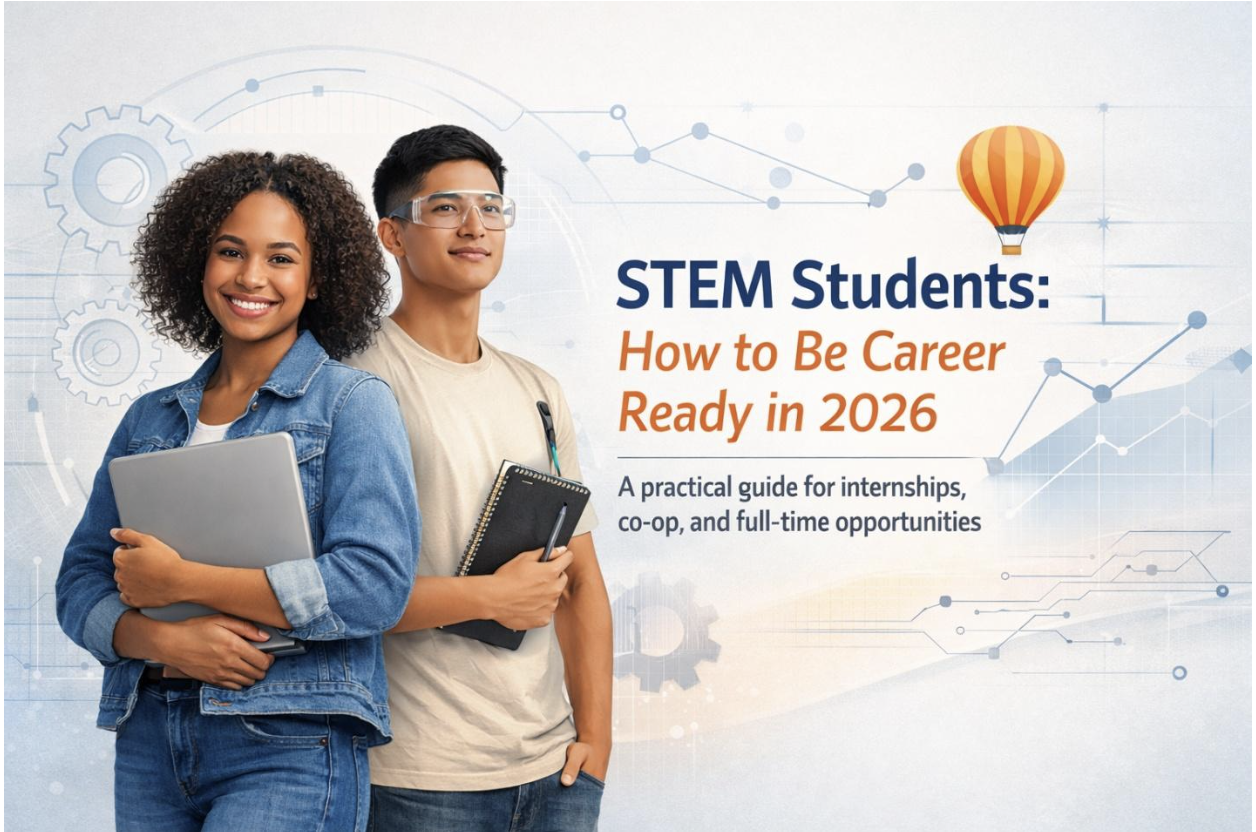
STEM Students: How to Be Career Ready in 2026
IEEE Supporters

Naeimeh Najafizadeh
Interdisciplinary Bridges
This new section is designed to highlight innovative, cross-disciplinary research led by students and early-career professionals across the globe. By showcasing work that blends engineering with fields like healthcare, sustainability, AI, and more, we aim to inspire collaboration and broaden perspectives within the student research community.

Agentic AI and Health

Bridging AI and Healthcare
2026 IEEE Canada Foundation Scholarship
Toronto section is honoured to have two winners oF 2026 IEEE Canada Foundation Scholarship; Ashley Nicole Leal and Ismail Sahin. These brilliant students are awarded with Canada Foundation Scholarship worth of $5000. They will be awarded with certificates during AGM 2026.

IEEE AGM 2025
The 2025 IEEE Toronto Section Annual General Meeting (AGM) was held on November 30 at Twist Gallery. More than 100 attendees gathered to celebrate a successful year and to recognize the Section’s outstanding volunteers. Welcome messages and remarks were delivered by the Section Chair, Dustin Dunwell, and the IEEE Canada President, Tom Murad. The event also featured a short presentation by the keynote speaker, Danny Christidis from Arm Canada. Following are the few highlights of the event. Read more
Events
-
-
IEEE TCCN Workshop on Cognitive Communications and Intelligent Networking
University of WaterlooThis one and half-day workshop will provide premium networking opportunities, bringing together leading experts and researchers to explore the latest advancements and emerging trends in cognitive communications and intelligent networking. The workshop will foster dynamic exchanges of ideas, showcase cutting-edge research, actively engage Young Professionals, and enhance ComSoc’s visibility while supporting membership growth. The workshop will strengthen collaboration and engagement among the IEEE Canada (Region 7), especially central-area Sections. ComSoc Chapter Chairs and Section delegates are invited to participate in the event, providing an opportunity to connect, exchange ideas, and establish a foundation for future collaborations. Workshop organizers Lian Zhao, Toronto Metropolitan University, IEEE Toronto Section Chair Lin Cai, University of Victoria Nitin Padmanabhan, EPRI Canada, Central Area Chair, IEEE Canada Dongmei Zhao, McMaster University Ning Zhang, University of Windsor Jie Gao, Carleton University Mingcheng He, University of Waterloo Technical Program Oct. 2nd, afternoon Panel 1: AI-Native Networks and Cognitive Communications: Research Frontiers, Industrial Perspectives, and the Road to 6G Panelists: Jianping Pan (Moderator), University of Victoria, Canada Jiming Chen, Zhejiang University/Zhejiang University of Technology, China Haojin Zhu, Shanghai Jiaotong University, China Haibo Zhou, Nanjing University, China Zhiguo Shi, Zhejiang University, China Zhou Su, Xi’an Jiaotong University Panel 2: Preparing the Next Generation of Researchers and Engineers for AI-Native Networking Panelists: Yu Cheng (Moderator), Illinois Institute of Technology, USA Hangguan Shan, Zhejiang University, China Shaofeng Li, Southeast University, China Conghao Zhou, Xidian University, China Yan Meng, Shanghai Jiaotong University, China Yuanguo Bi, Northeastern University, China Oct. 3rd, invited talks: Jason Gu, Dalhousie University, Canada Xianbin Wang, Western University, Canada Yu Cheng, Illinois Institute of Technology, USA Jianping Pan, University of Victoria, Canada Hai Jiang, University of Alberta, Canada Jun Cai, Concordia University, Canada Cailian Chen, Shanghai Jiaotong University, China Lin X. Cai, Illinois Institute of Technology, USA Ping Wang, York University, Canada Rongxing Lu, Queen's University, Canada Xiaohui Liang, University of Massachusetts at Boston, USA Qiang Ye, University of Calgary, Canada Ajmery Sultana, Algoma University, Canada
-
-
40th IEEE Canadian Conference on Electrical and Computer Engineering (CCECE 2027)
Toronto Metropolitan University, Toronto, Ontario, CanadaCCECE is IEEE Canada's flagship conference, bringing together researchers, industry professionals, practitioners, and students from around the world to exchange ideas and present the latest advances in electrical, computer, and biomedical engineering. We warmly invite you to submit your latest research and join us in Toronto for an exciting technical program, inspiring keynote presentations, industry engagement, and valuable networking opportunities. Please visit the conference website for submission guidelines, important dates, and the latest conference updates: Conference Website: https://attend.ieee.org/ccece-2027/ You can also follow our LinkedIn page for conference announcements and news: LinkedIn: https://www.linkedin.com/company/ieee-ccece-2027/ As a major supporter and host of CCECE 2027, the IEEE Toronto Section looks forward to welcoming participants from around the world to Toronto in May 2027. Please see below Call for Paper, Call for Workshop Proposals, and Call for Tutorial Proposals Call for Workshop Proposals: https://www.ieeetoronto.ca/wp-content/uploads/2026/07/Workshop-Proposals-CALL.pdf Workshop Proposals Template: https://www.ieeetoronto.ca/wp-content/uploads/2026/07/Workshop-Proposal-Template.pdf Call for Tutorial Proposals: https://www.ieeetoronto.ca/wp-content/uploads/2026/07/Tutorial-Proposals-CALL.pdf Tutorial Proposals Template: https://www.ieeetoronto.ca/wp-content/uploads/2026/07/Tutorial-Proposal-Template.pdf