

RISE-NTN
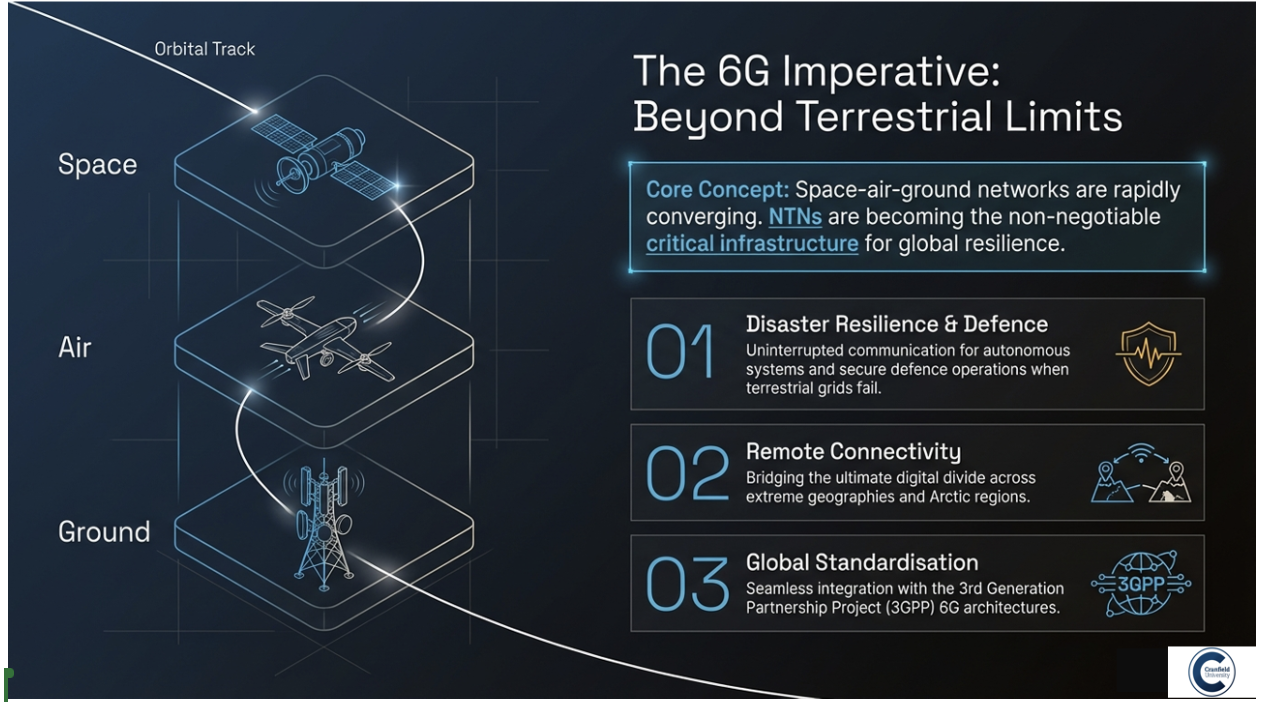 Non-terrestrial networks (NTNs) including satellite constellations, UAV-assisted links, and integrated space-air-ground systems are becoming critical infrastructure for disaster response, defence, remote connectivity, and autonomous systems. Increasing global dependence on NTNs for disaster resilience, autonomous systems, and remote-region connectivity, calls for the urgent need to address their carbon footprint and vulnerability to sophisticated cyber-attacks. At the same time, policymakers face growing concerns around:
- Energy sustainability of large LEO/MEO satellite constellations
- Security and resilience against jamming, spoofing, and cyber-physical attacks
- Trusted research and supply chains in strategically sensitive technologies
As global demand for ubiquitous connectivity continues to grow, non-terrestrial networks including satellite systems, high-altitude platform stations (HAPS), and unmanned aerial vehicles (UAVs) are expected to play a vital role in extending network coverage beyond traditional terrestrial infrastructure. The Research Innovation for AI-Driven Energy-Efficient and Secure Non-Terrestrial Networks for 6G (RISE-NTN) project is considered a significant milestone in advancing RISE-NTN’s vision of developing intelligent, energy-efficient, and secure non-terrestrial network technologies that will underpin future 6G communication systems. The RISE-NTN project addresses the challenge of network coverage by integrating Artificial Intelligence (AI) into NTN architectures to improve network intelligence, resource optimisation, energy efficiency, and cybersecurity while supporting seamless global connectivity.
RISE-NTN project is a new international research collaboration focused on next-generation Non-Terrestrial Networks (NTNs) that are simultaneously energy-efficient, secure, and AI-optimized. Furthermore, it establishes a focused UK–Canada research network dedicated to secure, energy-efficient, AI-driven NTNs for 6G, with a strong policy and sustainability lens. The project will explore the key 6G challenges across satellite, UAV, and ground network communication layers that can be addressed in long-term collaboration. Project is focussed on the following interconnected technical themes:
(a) Reliable NTN Architecture Design
- Evaluating approaches to improve link reliability for hybrid space–aerial–terrestrial networks, including UAV-assisted relay NTNs
- Comparing existing models and assumptions for robust connectivity in LEO/MEO satellite constellations under dynamic channel variations
(b) Energy-Efficient NTN for Sustainable 6G : Investigating and comparing AI-driven optimisation of resource management to evaluate energy performance trade-offs for futuristic NTN architectures, aligned with global Net-Zero targets.
- Analysing and harmonising models for energy harvesting and energy-aware routing for inter-satellite links.
(c) Security Threats and NTN Trust Frameworks
- Identifying, classifying, and prioritising threat modelling for NTNs, including jamming, spoofing, wormhole attacks, data-link intrusion, and cross-layer multi-vector threats
- Exploring physical-layer key generation, secure beam steering, and distributed ledger technologies for secure routing
This project is led by Dr. Shahid Ayub of Cranfield University (UK), the project is supported by partners; Dr. Waleed Ejaz of Lakehead University (Canada) and Dr. Haris Pervaiz of the University of Essex (UK).
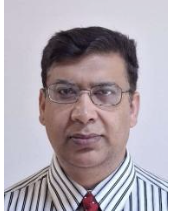 Dr Shahid Ayub is a Lecturer in Communications and Networks Defense and Security at Cranfield University at Shrivenham. Dr Ayub has over 15 years of multi-disciplinary research experience in RF broadband communication, wireless networking, artificial intelligence, sensor systems, security and privacy, and internet of things. He is actively involved in various research activities in past which include: Datalink Communications Systems for Aerodrome Connectivity, Human Machine Interface for Autonomous Vehicles, Broadband communication system design, testing, analysis and applications, Wireless sensor systems data acquisition and statistical analysis, mmWave technology prototype testing and characterization, AI algorithm design for Indoor/Outdoor localization and positioning systems using WiFi, 4G, GPS technologies.
 Dr. Waleed Ejaz is a Lakehead University Research Chair and Associate Professor in the Department of Electrical and Computer Engineering at the Barrie Campus of Lakehead University, Ontario, Canada. He received the Lakehead Research Excellence Award for significant contributions from 2022 to 2024. Before joining Lakehead University, Dr. Ejaz held academic and research positions in Thompson Rivers University, Kamloops, British Columbia, Toronto Metropolitan University (formerly Ryerson University), Carleton University, and Queen’s University in Canada. His research focuses on communication and networking technologies for the Internet of Things (IoT), 6G and beyond wireless networks, machine learning and artificial intelligence for wireless systems, and mobile edge computing. Dr. Ejaz has co-authored over 150 peer-reviewed journal and conference papers and 3 books in these areas. He is an Associate Editor for the IEEE Wireless Communications Letter and Springer Wireless Personal Communications.
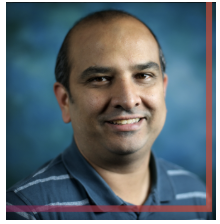 Haris Pervaiz is an Associate Professor at School of Computer Science and Electronic Engineering in University of Essex, UK. Previously, he was an Assistant Professor at School of Computing and Communications in Lancaster University, UK and was an EPSRC Doctoral Prize Fellow and Research Fellow at 5G Innovation Centre (5GIC) of University of Surrey, UK. Dr. Pervaiz has contributed more than 90 leading international technical journal and peer reviewed conference papers. His research interests include 5G & Beyond, Green Communication, mmWave Communication, Energy & Backhaul Energy Efficiency and Green HetNets. He is an associate editor for IEEE Access, Wiley ETT, Wiley ITL, IET Networks and IET Communications.